
Data Science Interview Prep: Q128
List Comprehension in Python - Part 1. (Category: Python Programming)

Explain the concept of list comprehension in python with an example.Why do we need it?
Solution:
List comprehension (LC) provides a concise way to create a new list from the values of an existing iterable (such as a list, tuple, or range) by applying an expression to each element, resulting in clean, concise, and readable code compared to traditional loops.
In this article, we will explore how list comprehension can be used with a for loop and nested for loops.
(a). Basic LC syntax: [expression for item in iterable if condition].
We understand how the above syntax can substitute the syntax for a for loop.
Parameters:
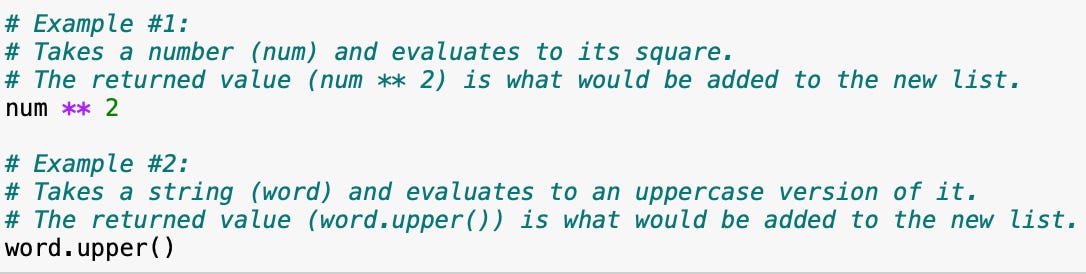
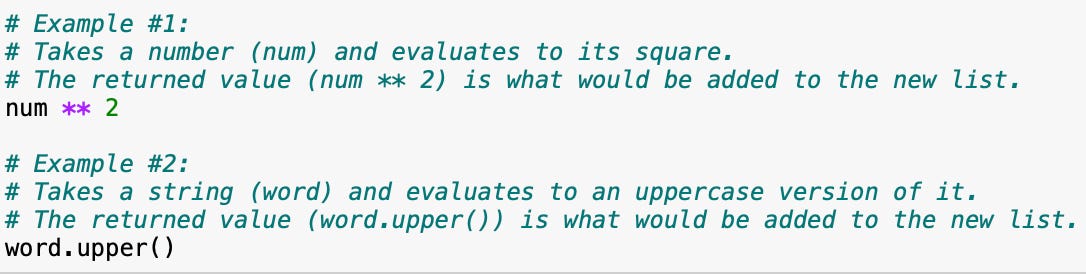
Expression: This defines what you want to do with each item in the list. It can be a simple value, a calculation, or a function applied to the item. The result of this expression is what gets added to the new list.
Example:
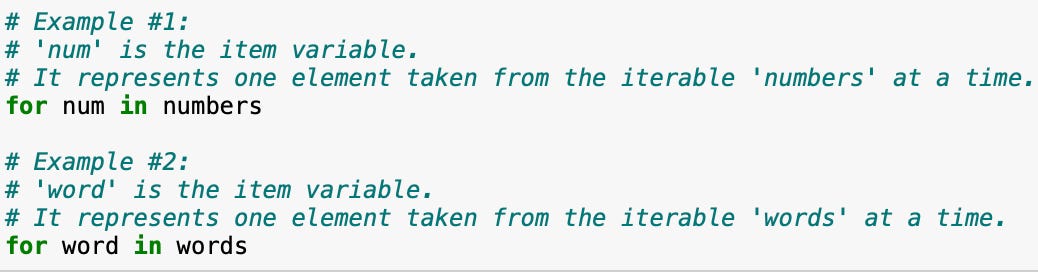
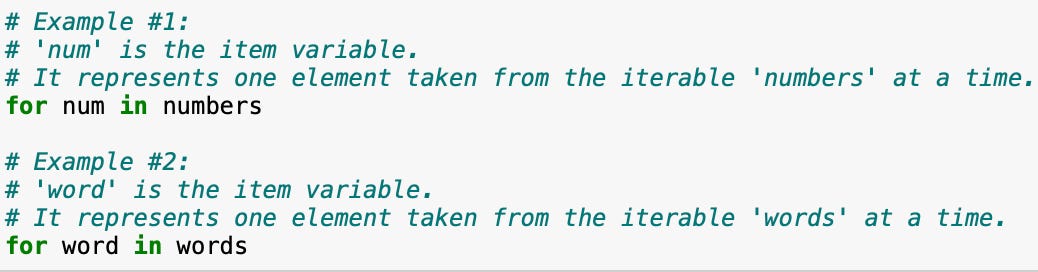
Item: The temporary variable that represents each element from the iterable as the loop runs. You can name it anything meaningful.
Example:
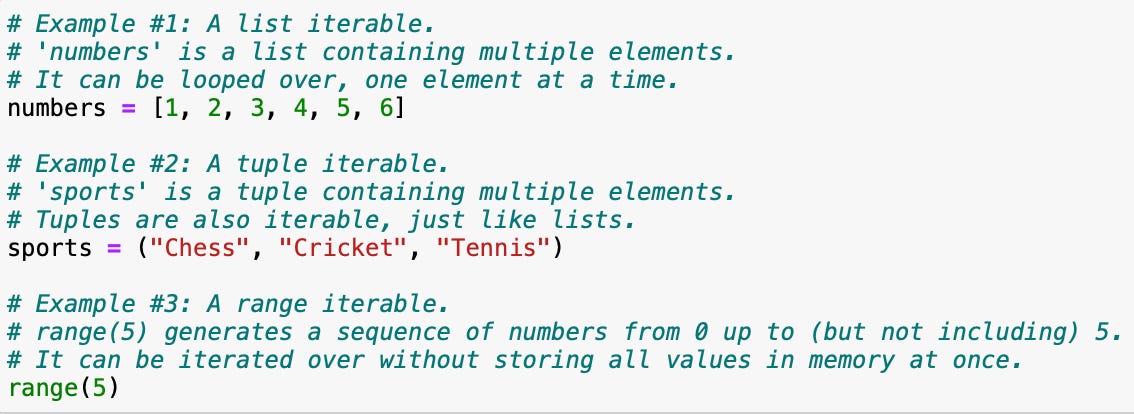
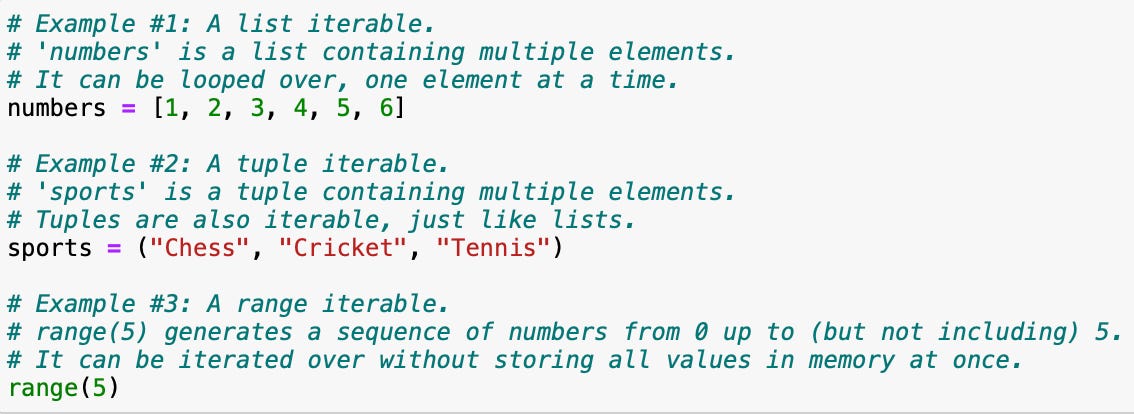
Iterable: The collection of elements you want to loop over. This can be a list, tuple, string, range, or any other object that can be iterated.
Example:
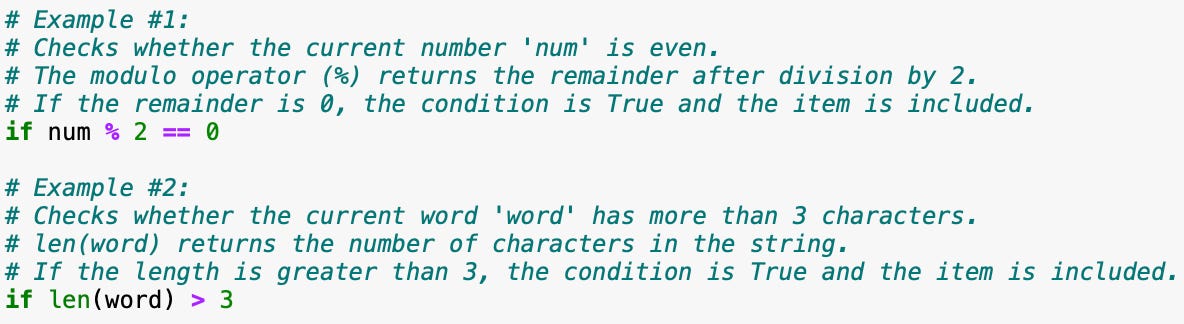
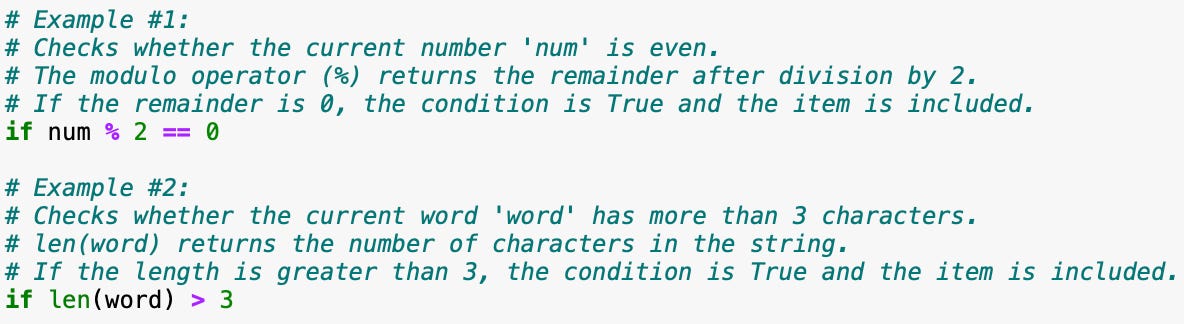
Condition (optional): A filter that decides which items are included in the final list. Only items for which the condition is True are processed by the expression.
Example:
(b). For loop vs List Comprehension.
A for loop requires multiple lines to build a new list by iterating over items and appending them manually. List comprehension achieves the same result in a single line, making the code shorter and easier to read.
Iteration of a list using for loop: A for loop executes its code block exactly once for every item in the list. It operates by visiting every element in the list in order, automatically stopping once the final item is reached.
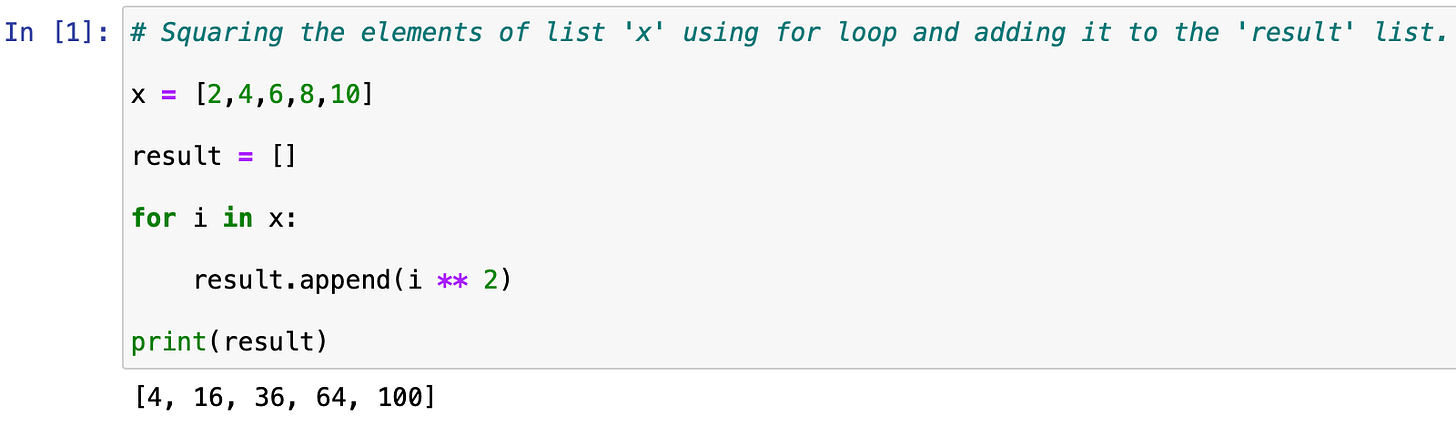
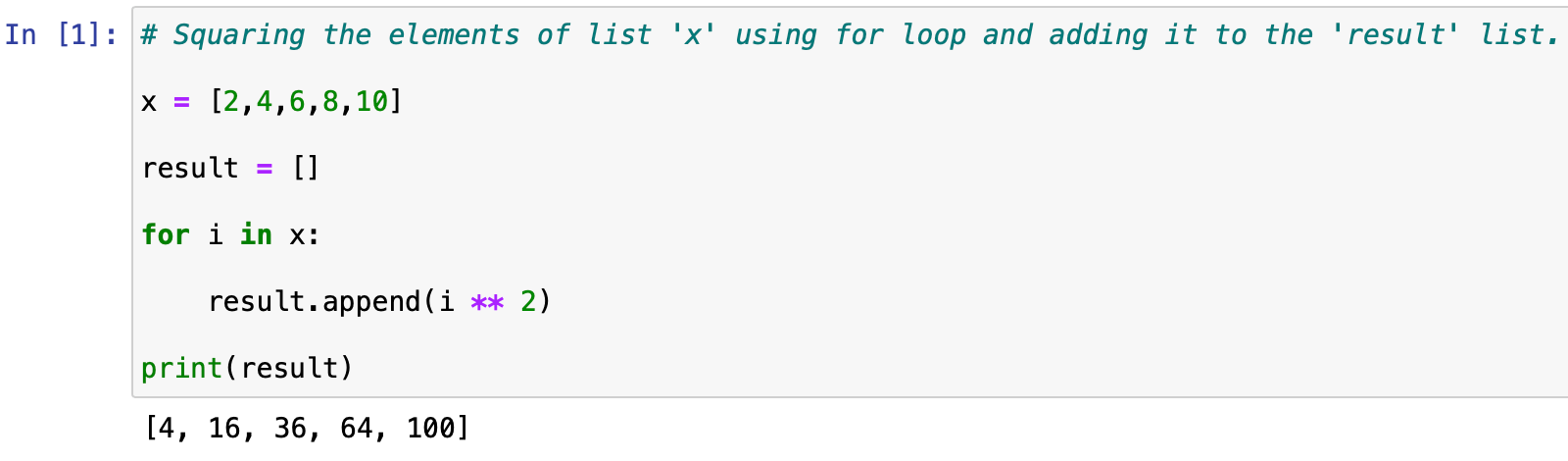
Example of iterating through a list using a for loop:
Explanation of the above code snippet:
The for loop visits every element in the list in order, assigning each value in the list x to the variable i one at a time.
The loop executes its code block exactly once for every item in the list x, squaring the number and adding it to the result list.
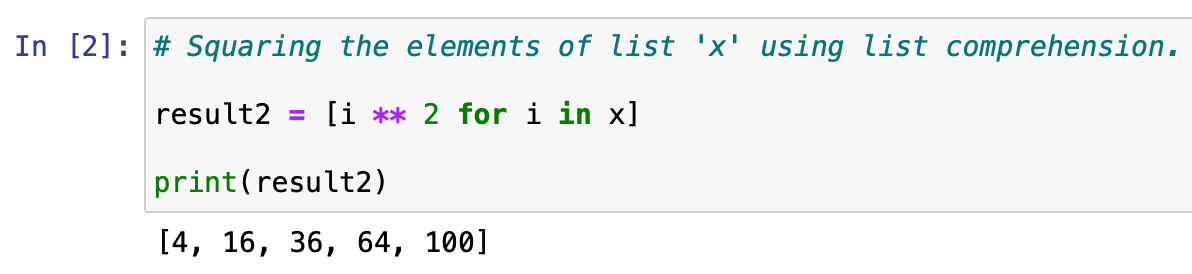
Iteration through a list using list comprehension method: This example shows how to iterate through a list using list comprehension.It provides a simple, one-line alternative to a for loop. List comprehension syntax to iterate through a for loop is provided in part (a), i.e., [expression for item in iterable if condition].
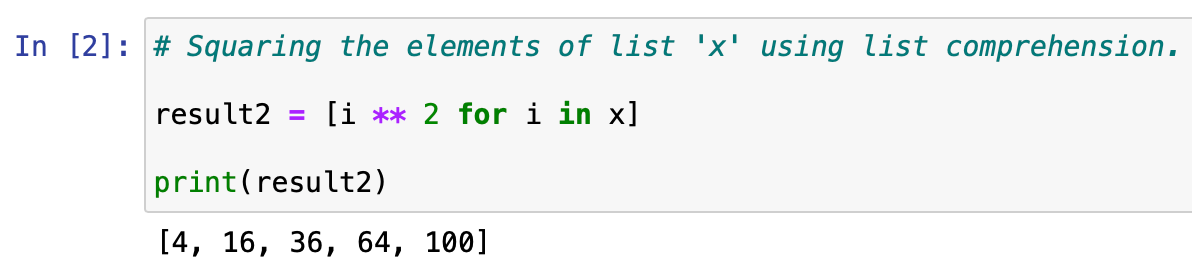
Example of achieving the for loop iteration using list comprehension method:
Explanation of the above code snippet:
The list comprehension method visits every element in the list x in order, assigning each value to the variable i one at a time. It then squares each value and automatically collects the results into the new list result2.
(c). Nested LC syntax: [<expression> for <outer_loop> for <inner_loop>].
A nested for loop uses multiple loops to iterate through items within items, often requiring several lines to build a new list. Nested list comprehension achieves the same result in a single, more concise line.
Creating coordinate pairs nested for loop: A nested for loop runs an inner loop for each item of the outer loop, allowing iteration through multiple lists or dimensions.
Example of create coordinate pairs using a nested loop:
We create all possible coordinate pairs from two ranges shown below.
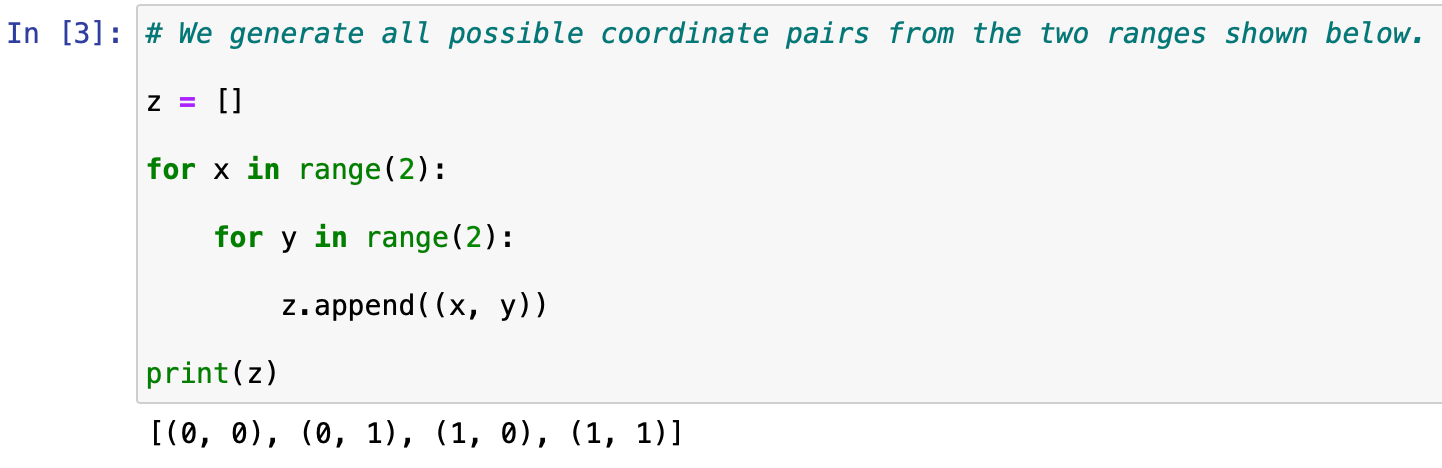
Explanation of the above code snippet:
The nested for loops creates a list z containing all possible pairs of numbers where x and y each take values from 0 to 1, effectively producing the Cartesian product of the two ranges.
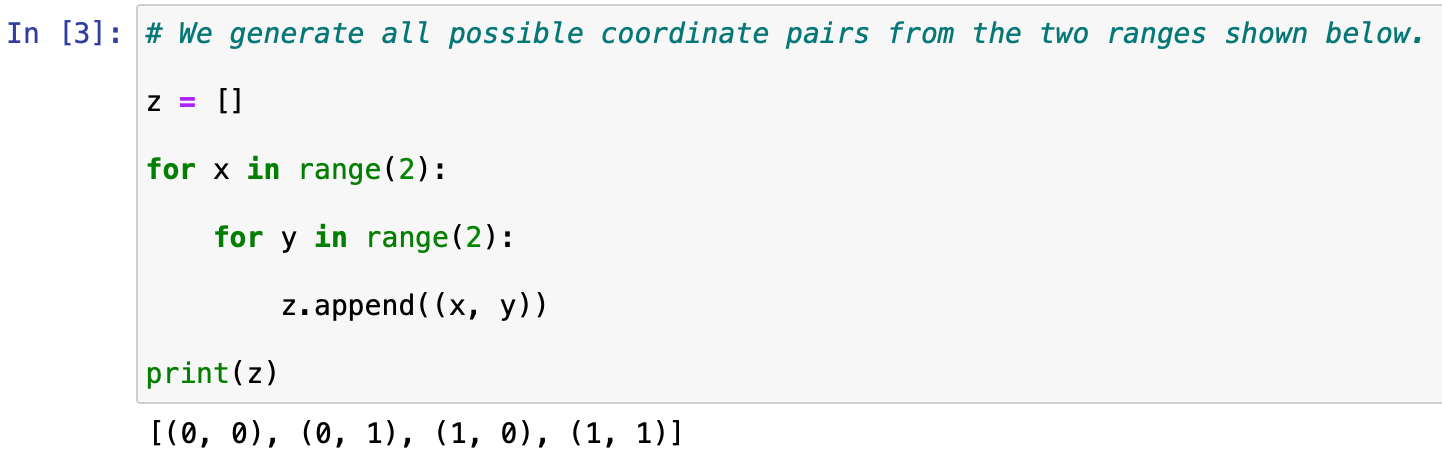
Creating coordinate pairs using list comprehension method: The list comprehension approach generates all possible combinations of coordinate pairs from two ranges in a single, concise line. It produces the same results as nested for loops but with much less code, making it cleaner and easier to read.
Example of create coordinate pairs using list comprehension approach:
We generate all possible coordinate pairs from the two ranges using a single line of code.

Explanation of the above code snippet:
Using the list comprehension method, we generate coordinate pairs using the two ranges in a single line of code. This approach produces the same result as nested loops but is more concise and readable.

We will cover more examples in the next article!
We hope you found the article both enlightening and valuable! For more insightful content delivered straight to your inbox, simply enter your email address below and hit the subscribe button. Stay tuned for future updates!
Reference:
List Comprehension: https://docs.python.org/3/tutorial/datastructures.html